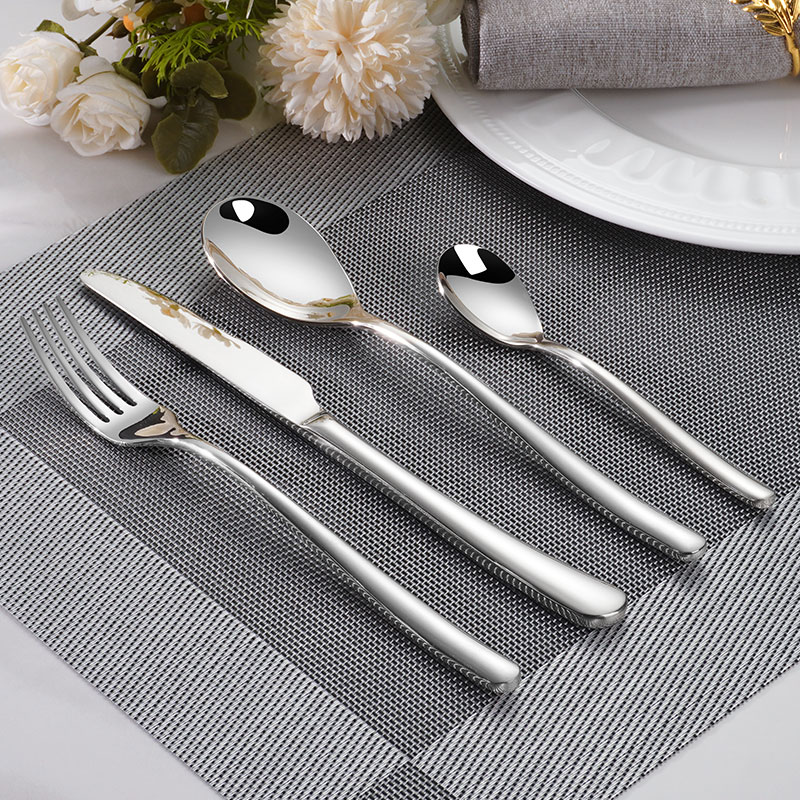
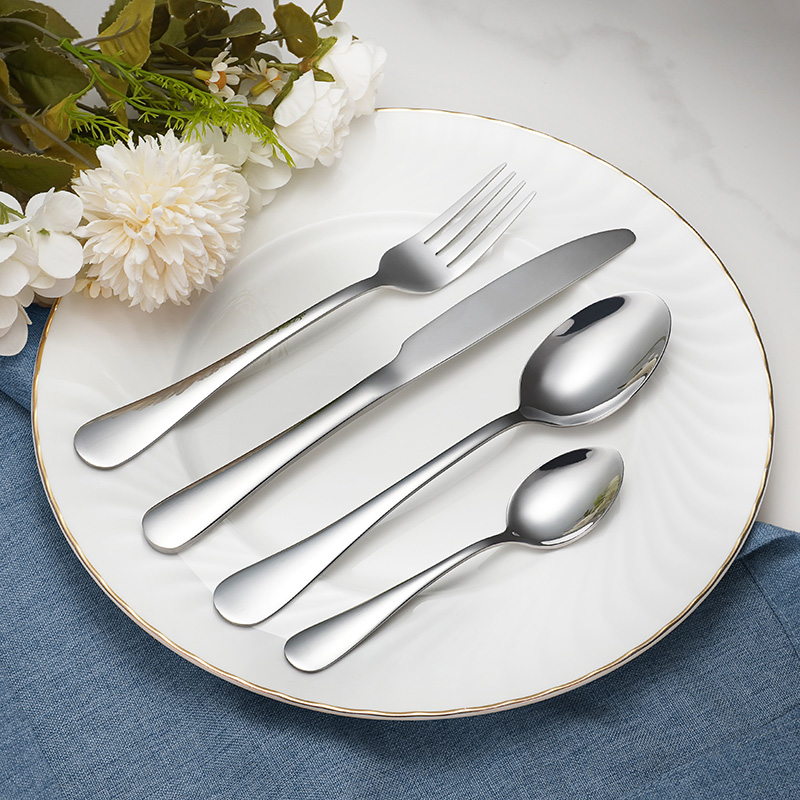
Choosing between 18/10, 18/8 and 18/0 stainless steel flatware is not simply a matter of selecting the highest number. The right material depends on the target market, expected washing conditions, magnetic-retrieval requirements, product positioning and cost target. This guide is written for importers, hospitality buyers, distributors and private-label brands that need a practical basis for specifying stainless steel cutlery.
The short answer is that 18/10 and 18/8 normally refer to chromium-nickel austenitic stainless steel associated with AISI 304, while 18/0 generally refers to a magnetic ferritic grade associated with AISI 430. Chromium helps stainless steel form its corrosion-resistant passive surface; nickel helps stabilize the austenitic structure and supports corrosion resistance and appearance. However, the alloy label alone does not determine the weight, edge quality, balance, polish or durability of a finished fork, spoon or knife.
Key Takeaways for Flatware Buyers
- 18/10 and 18/8 are closely related commercial labels. Both commonly point buyers toward AISI 304 / EN 1.4301 stainless steel. The British Stainless Steel Association notes that “18/10” should not be treated as proof that a finished item contains exactly 10% nickel.
- 18/0 is usually magnetic. It is commonly associated with AISI 430 / EN 1.4016 ferritic stainless steel and can suit value-led or high-volume foodservice programs.
- Material grade is only one part of quality. Gauge, piece weight, polishing, fork-tine finishing, knife construction and process control all affect the final product.
- Knife blades often use a different steel. A blade needs hardness and edge retention, so a manufacturer may use a hardenable martensitic stainless steel rather than the alloy used for spoons and forks.
- Approve a physical sample and written specification. Do not rely on an alloy stamp, a photograph or a price quotation alone.
What Do 18/10, 18/8 and 18/0 Mean?
The two numbers are commercial shorthand for chromium and nickel content. In an 18/8 label, the first number indicates about 18% chromium and the second indicates about 8% nickel. An 18/0 label indicates chromium-containing stainless steel without an intentional nickel percentage in the shorthand. These labels describe an alloy direction; they are not quality scores and they do not describe the complete finished product.
According to the British Stainless Steel Association, 18/8 is commonly known as AISI 304 or European grade 1.4301. The same source explains that 18/10 is used as an alternative cutlery designation for essentially the same grade family, while 18/0 is commonly associated with ferritic AISI 430 or European grade 1.4016. This distinction matters because austenitic and ferritic stainless steels behave differently in corrosion exposure and magnetic sorting systems.
18/10 vs 18/8 vs 18/0 Stainless Steel Flatware
- 18/10: Commonly selected for premium retail, hotel and restaurant programs where appearance and corrosion-resistance expectations are high. It is generally non-magnetic or only weakly magnetic after forming.
- 18/8: Also associated with AISI 304 and very close to 18/10 in practical cutlery sourcing. Buyers should compare the actual material declaration and finished sample rather than assuming a major performance difference from the label alone.
- 18/0: Commonly associated with AISI 430. It is magnetic, contains no intentional nickel in the commercial label and is often chosen for value-oriented or magnetic-recovery applications.
The broader metallurgical distinction is supported by worldstainless: austenitic stainless steels contain enough nickel or manganese to stabilize their structure and are generally non-magnetic, while ferritic grades are chromium stainless steels with different magnetic and forming characteristics.
Is 18/10 Better Than 18/8?
For most flatware sourcing projects, 18/10 should not automatically be treated as a separate, superior grade to 18/8. Both labels are widely used for AISI 304-type cutlery, and the exact chemistry should be confirmed through the applicable material documentation. A buyer comparing two products should therefore look beyond the stamp and review the full specification.
A well-made 18/8 fork can outperform a poorly finished product marketed as 18/10. Important variables include material thickness, forming consistency, surface preparation, polishing, tine alignment, edge finishing and washing instructions. If you are still defining the acceptance criteria, QZQ’s guide to evaluating flatware quality provides a practical inspection framework.
When Does 18/0 Flatware Make Sense?
18/0 stainless steel is not automatically “bad” flatware. It can be the correct commercial choice when the program prioritizes magnetic recovery, controlled replacement cost, a specific retail price point or a shorter service cycle. Many high-volume foodservice operations use magnetic systems to help prevent cutlery from being discarded with food waste; a ferritic 18/0 product can support that workflow.
The trade-off is that AISI 430 generally offers lower corrosion resistance than AISI 304 under demanding exposure. Washing chemistry, residual salt, prolonged moisture, high temperature and surface damage can all influence staining or corrosion performance. Buyers should test the approved sample under the actual dishwasher, detergent, water and storage conditions expected in the market rather than relying on generic claims.
Why Are Flatware Knives Often Made Differently?
Spoons and forks need formability, surface quality and corrosion resistance, but a knife blade also needs hardness and edge retention. Austenitic 18/8 or 18/10 stainless steel cannot be hardened by conventional heat treatment in the same way as martensitic blade steel. For this reason, quality table knives are often made with a hardenable stainless blade and a separate handle, or from a suitable one-piece martensitic grade.
This is why a magnet test on a knife does not necessarily prove that the rest of a flatware set is 18/0. The blade and handle may use different materials, and cold working can also cause a weak magnetic response in some austenitic pieces. Always evaluate each component against the agreed bill of materials and construction method.
Which Stainless Steel Grade Fits Your Program?
Premium Retail and Hospitality Collections
Choose an AISI 304-type specification, commonly described as 18/8 or 18/10, when the brief emphasizes a refined finish, long service life and stronger corrosion-resistance expectations. The final result still depends on gauge, polishing and care. Request pre-production samples in the exact mirror, satin, brushed, PVD or mixed finish planned for production.
High-Volume Restaurants and Institutional Dining
Consider 18/0 when magnetic retrieval and replacement economics are important. Define the washing environment and check whether the operator uses cutlery-recovery equipment. A heavier-gauge 18/0 piece may feel more substantial than a thin 18/10 piece, because weight is primarily a function of dimensions and design rather than the alloy label.
Private-Label and Promotional Programs
Start with the target retail price, expected product life and brand promise. Then compare qualified samples in both material directions. QZQ’s stainless steel cutlery range illustrates different shapes and finish directions, while its OEM and ODM customization service covers material selection, product design, logo application, finish and packaging.
What Should a Flatware Specification Include?
An effective request for quotation should define more than “18/10 stainless steel.” The clearer the specification, the easier it is to compare suppliers, control samples and avoid disputes during mass production.
- Material for each component: forks, spoons, knife blades and knife handles may require separate declarations.
- Dimensions and gauge: state the length, width, thickness and target piece weight with acceptable tolerances.
- Surface finish: specify mirror, satin, brushed, bead-blasted, PVD or mixed finishing, including the required color reference when relevant.
- Workmanship criteria: define edge smoothness, fork-tine alignment, polish uniformity, weld quality and acceptable cosmetic limits.
- Performance and compliance: identify the intended market, washing conditions, food-contact requirements and any third-party testing required by the buyer.
- Branding and packaging: confirm logo method, placement, retail packaging, carton markings and barcode requirements.
- Approval controls: retain a signed specification and approved reference sample for production inspection.
For terminology, it also helps to distinguish product type from material. The article flatware vs silverware explains why stainless steel cutlery is often called silverware even when it contains no silver.
Common Sourcing Mistakes to Avoid
The first mistake is assuming that 18/10 always means heavier or more durable. Alloy grade does not determine thickness or balance. The second is using a magnet as the only acceptance test: magnetism is useful as a screening clue, but it does not replace documentation or product-specific testing.
Another common mistake is approving an uncoated sample and later ordering a colored or textured finish without repeating the evaluation. Surface preparation and decorative treatments can change appearance, cleaning behavior and inspection criteria. Finally, do not leave dishwasher conditions undefined; detergent concentration, water chemistry, drying and storage practices can influence real-world results.
Frequently Asked Questions
Is 18/10 stainless steel the same as 304 stainless steel?
In cutlery sourcing, 18/10 is commonly used for the AISI 304 / EN 1.4301 family, but it should not be treated as a laboratory certificate showing exactly 10% nickel. Ask the supplier for the applicable material declaration and confirm the finished product against the agreed specification.
Is 18/8 stainless steel good for flatware?
Yes. 18/8 is one of the most common designations for AISI 304 stainless steel and is widely used for quality forks, spoons and handles. Finished quality still depends on thickness, forming, polishing, edge treatment and process control.
Is 18/0 flatware safe for commercial use?
18/0 flatware is widely used in commercial programs when its material, manufacture and food-contact compliance meet the destination market’s requirements. It is magnetic and often cost-effective, but it generally needs more careful matching to washing and storage conditions than an AISI 304-type product.
Does 18/10 flatware rust?
No stainless steel is completely immune to staining or corrosion. 18/10-type flatware normally offers strong corrosion resistance, but prolonged contact with salt, aggressive chemicals, moisture or unsuitable dishwasher conditions can still cause problems. Correct cleaning, rinsing and dry storage remain important.
Which grade is best for a custom flatware brand?
There is no universal best grade. A premium hospitality line may favor AISI 304-type material, while a value-led or magnetic-recovery program may favor 18/0. The best choice is the one that satisfies the brand promise, service environment, target cost and verified sample performance.
Final Recommendation for Buyers
Use 18/10, 18/8 and 18/0 as starting points, not complete quality specifications. For most premium programs, an AISI 304-type material is a logical shortlist; for magnetic-recovery or value-focused applications, AISI 430-type 18/0 can be commercially appropriate. In every case, define the complete product, approve a physical sample and test it under the intended service conditions.
QZQ has manufactured stainless steel cutlery, coffee tools and bar tools since 1989 and supports OEM and ODM projects for global buyers. To discuss grade selection, finishes, piece combinations, branding and packaging for your next program, contact the QZQ team with your target market and specification.